Luanda goes rail-mounted: EDECS and DP World rebuild Angola's busiest quay
A 610-metre quay wall upgrade will bring ship-to-shore gantry cranes to Angola's largest port.
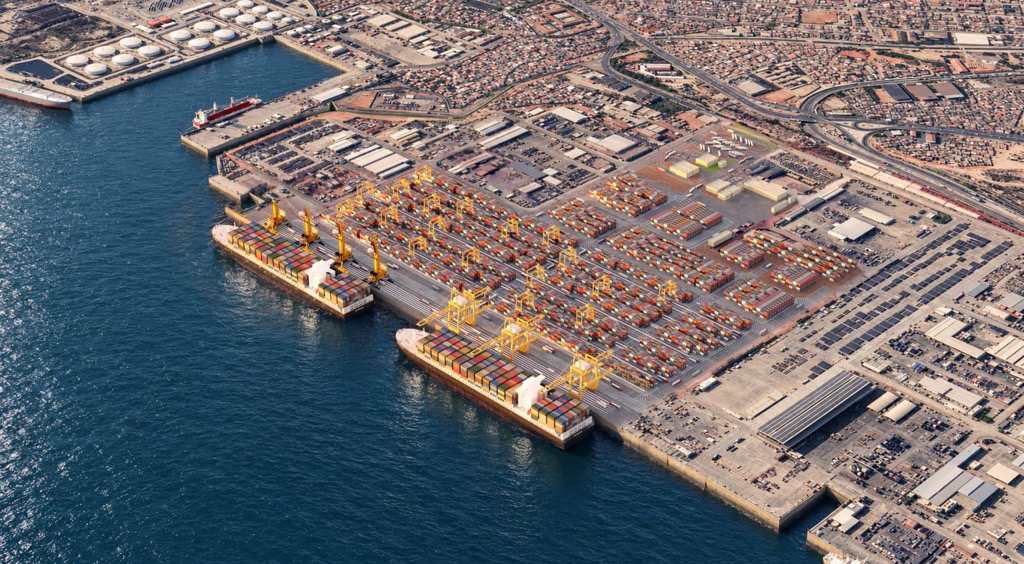
DP World has handed EDECS Group the design-and-build contract to strengthen the full quay wall at its Luanda container terminal, clearing the way for rail-mounted ship-to-shore cranes.
Angola's main container gateway is getting a structural rebuild. DP World has awarded EDECS Group, an engineering, procurement and construction contractor active across the Middle East and Africa, the design-and-build contract to strengthen and upgrade the quay wall at its container terminal in the Port of Luanda, the country's largest port.
The work covers the full 610-metre length of the existing quay. Its purpose is simple to state and hard to execute: make the wall strong enough to carry rail-mounted ship-to-shore (STS) gantry cranes.
Why the cranes matter
Luanda currently relies on mobile harbour cranes. Moving to rail-mounted STS gantries changes the economics of every vessel call: faster loading and unloading, shorter turnaround times and higher throughput across the berth. The stronger quay will also let the terminal receive larger, deeper-draft ships.
For importers and exporters, that translates into lower waiting time and potentially lower landed costs. For Angola, it strengthens Luanda's case as a container hub on the West and Southern African coast.
What is being built
The engineering package is substantial:
- 120 piles, each 1.0 metre in diameter and up to 45 metres long, verified through ultrasonic cross-hole, high-strain dynamic, integrity and load testing. - A new reinforced concrete back beam on the landside and an extension of the existing capping beam. - A complete crane rail system with A150 rails, buffer stops, stow pins, tie-downs, cable drums and panzer belts. - The utilities needed to run the cranes: wet and dry services, cabling and ducts, quay substations, fire-fighting networks and low-voltage provisions.
All of this has to happen inside a working port, which is where most of the delivery risk sits.
A deepening partnership
The contract extends a relationship between the two companies that already includes the Dar es Salaam seaport project in Tanzania. EDECS chairman and managing director Eng. Hussein El Dessouky described the Luanda job as technically demanding work in a live operational environment. Francisco Pinzón, CEO of DP World Luanda, called the quay modernisation a milestone that would lift productivity and competitiveness for trade through Angola.
The bigger picture
African port capacity remains a bottleneck for regional trade. Private terminal operators investing in heavy infrastructure, rather than only equipment, is the kind of commitment that changes a port's long-term ceiling. Businesses that ship through Luanda should watch the construction timeline closely: the payoff is faster vessel handling, but the build period will need careful scheduling around live operations.